Jesus Encounters the Pious
Sermon for the Second Sunday in Lent
“People of faith” is one of those euphemisms employed today to group things that are not all that similar into a category with one another. The media uses the phrase “people of faith” to refer to everyone from Catholics to Jews to Protestants to Mormons to Buddhists to Jainists. Many of these groups have little to nothing in common. The word is really being used to mean “religious adherents,” or perhaps more strongly, “those for whom a religious tradition significantly influences their lives.”
The Bible means something different when it talks about faith. In today’s scriptures, the meaning of “faith” comes across very clearly. Faith is not a subjective emotional state. It means, basically, “believing in the promises of God and acting on that belief.” At the root of it, “faith” doesn’t depend on an established religious system. Now, I’ll qualify that in a minute because you might hear me saying something I don’t intend to say, which is that religion is optional. It’s not. I don’t believe we can do without religion. But it comes from faith, as a response to it, rather than the other way round.
The patriarch Abram is, by biblical definition, a “person of faith.” In what does that faith consist? This wandering Aramean, this moon-worshipping pagan, heard God call him out and make him a promise, and so he picked up and left everything behind, at the age of 75. (Go west, old man!)
Abram at that time was not a member of any religion we would recognize today. Rather, he became the founder of a new nation that did not yet exist, created through his faith, which comprises everyone who, like him, believes in the promises of God. These promises, we believe, are ultimately fulfilled in his descendant, Jesus.
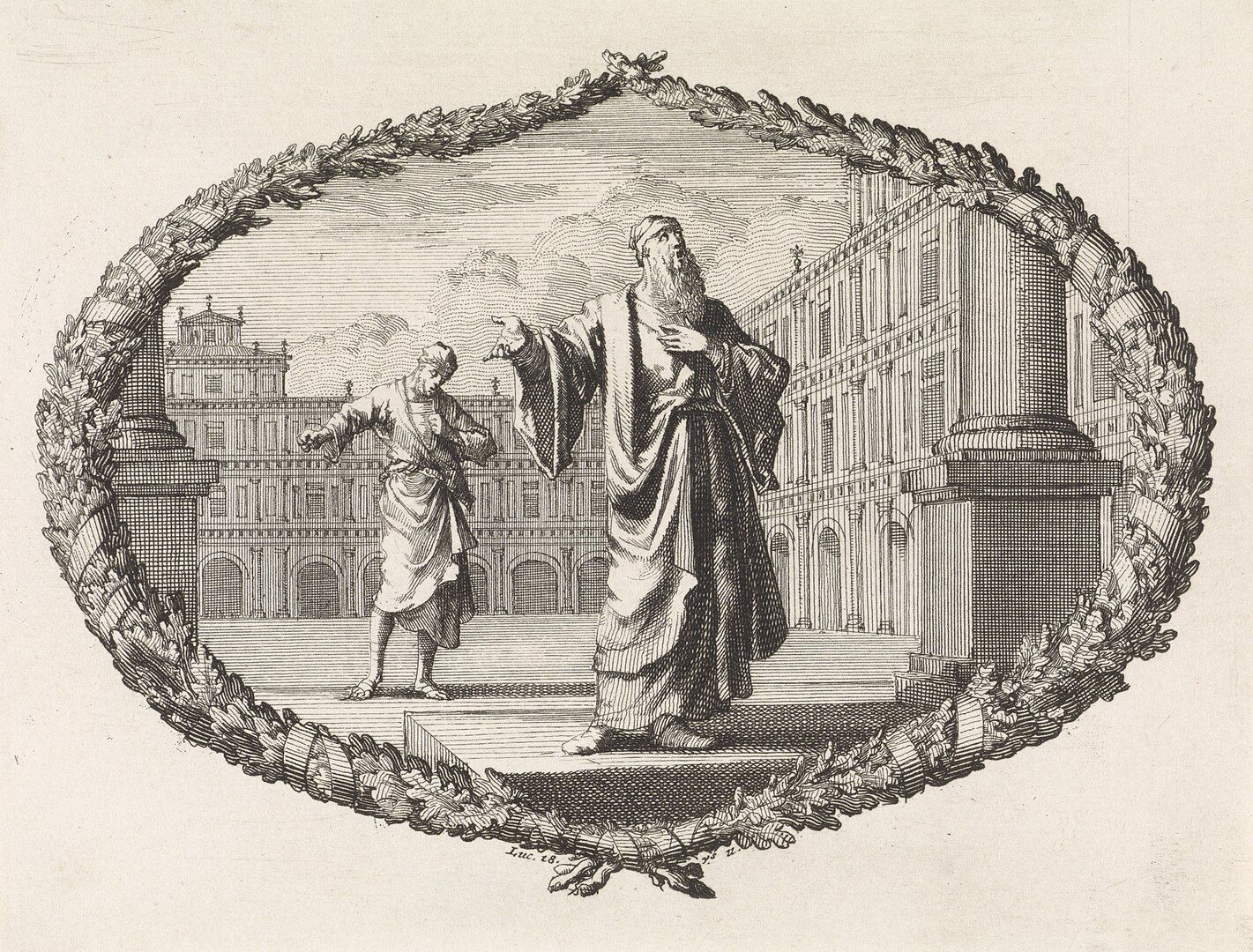
Jesus, in today’s gospel, encounters Nicodemus, who was a Pharisee and a member of the Council of the 70, the Sanhedrin—a prominent representative of what people today might call the “Abrahamic faith.” He opens with what might well be intended as a generous concession: “Rabbi,” he says, respectfully, “we know” (speaking not just for himself but for many of his associates) “that you are a teacher come from God.” This was not something that many Pharisees were in fact willing to admit, certainly not in public, and many actively disputed it.
Nicodemus says, “we know,” but Jesus is not satisfied with what “we know.” He says, “Unless one is born again, he cannot see the kingdom of God.” It seems Nicodemus does not know enough, and what he does not know will be a challenge for him to accept. Because the kingdom of God personified is standing right in front of him, and he has no clue. He thinks Jesus is another good teacher, maybe even a truly great teacher like Moses, sent by God, but no more.
But Jesus says, “you must be born again.”
Nicodemus is flummoxed. “How can a man be born again when he is old?” How, we might say, is an old dog to learn these new tricks? Abram, at 75, could well have asked the same question. How is a new life, a new home, a new family possible for me and Sarai, at our age? Indeed, in both cases, what God promises is impossible. It enters the realm of miracle, that which cannot come to pass without an act of new creation by God.
Jesus is the new creation, and he invites Nicodemus, and us, to enter into his new life.
Despite the Christian message being clearly proclaimed for 2000 years, many people still bear this false opinion of Jesus, that he is a great teacher, perhaps even a revolutionary religious founder on a level with other notables, such as Moses, the Buddha, Confucius, the prophet Mohammed, and so on—”People of faith,” as it were. They completely miss the point. To them, as to Nicodemus, Jesus says, “you need to be born again.” Your whole system of life will have to be overturned before you can see what has been in front of you the whole time.
And this may be true even for those of us who do recognize Jesus as the Son of God. When Jesus encounters the religious, like Nicodemus, he takes them back to the beginning. They must unlearn all they thought they knew. Just like Abraham’s journey from Mesopotamia, the conversion of the religious must often take place on unfamiliar ground, the ground that we find ourselves standing on not by choice and comfortable habit, but through catastrophe and loss. It is at such moments when we may be prompted to really turn and know Jesus for who he truly is, as if for the first time.
As Christians, we don’t find our deepest identity in our religious affiliation. I hope that, when asked to give a reason for the hope that is within us, we don’t start telling people about St. Michael’s, or, God forbid, the Episcopal Church! These may be fine things in their way, but that’s not where the power lies. God can very well accomplish his saving purposes in the world without St. Michael’s or the Episcopal Church, though we should seek to make ourselves useful to his mission if we can.
John wraps up this story of Jesus and Nicodemus with a verse that is familiar to us, yet one of the sweetest and most powerful summaries of the gospel in scripture. God loves the world—loves you, loves me, loves your neighbor, loves the guy in the parking lot at Market 32, loves even Vladimir Putin, so much that he sent Jesus, his one and only son, to save us all from the eternal death and separation from God that is the consequence of all our sin, and give us everlasting life with him instead.
Not that any of us deserved this, or anything good at all. Human sin cries out for vengeance, and even our conscience testifies against us. So as a remedy, he offers us the undeserved gift of his righteousness. The power of this gift is such that it changes us, so that we begin to desire and do what is good and holy in his sight. Old dogs learn new tricks. Old men are born again.
Faith, therefore, is trusting in the promises of Abraham’s God, the God who as St. Paul writes, “gives life to the dead and calls into existence the things that do not exist.” Faith is powerful because of who we have faith in. Baptism is the sacrament of this new birth, precisely because of who it joins us to, so that not by our own feeble efforts and fickle emotions, but by his steadfast love and almighty power, are we saved.